
News & Press
- Home
- >>
- Info
- >>
- News & Press
- >>
- View Details
Latest News
Got any Questions?
CALL US NOW
Mobile: 0086 186 5335 4363
Tel / Fax: 0086 533 3588750
Email: info@crusher-world.com

The Billion-Yuan Market Arrives: End-of-Life PV Panel Recycling Embraces Industrial Breakthrough —Fr
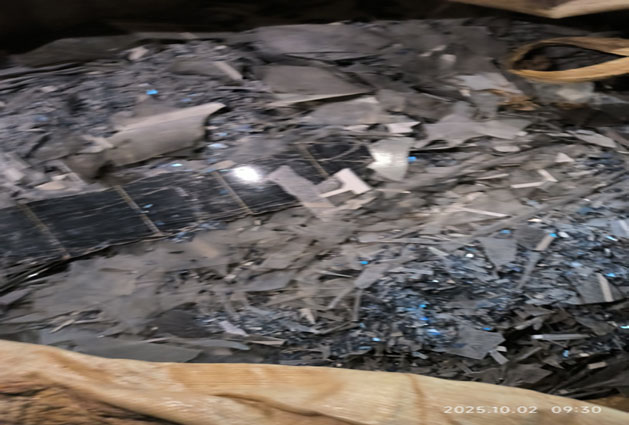
At a photovoltaic power station in northwest China, operations and maintenance technician Zhang recently encountered a thorny problem: the first batch of PV modules in service for over 15 years has begun to degrade on a large scale, with power generation efficiency dropping below 70% of their initial capacity. When these "blue silicon wafers" that once illuminated millions of households complete their mission, where will they go? This question troubles not only Zhang but also poses a mandatory challenge for the entire PV industry.
Since China's PV industry began large-scale development in 2000, and based on the 25-year design lifespan of PV modules, early-deployed modules in China officially entered the decommissioning phase in 2025. According to data from the Wind and Solar Equipment Recycling Professional Committee of the China National Resources Recycling Association, China will begin generating large quantities of decommissioned PV modules in 2025; after 2030, PV module waste will reach its peak at approximately 1.4 million tons; by 2040, cumulative PV module waste will reach 253 GW, approximately 20 million tons. Meanwhile, international market research institutions predict that nearly 80 million tons of PV modules globally will enter the recycling stage by 2050.
Faced with this impending "retirement wave," how to handle these special solid wastes has become a strategic issue concerning environmental protection and resource security.
The Retirement Wave Strikes: Triple Dilemma in End-of-Life PV Panel Treatment
PV modules are not ordinary waste. A standard crystalline silicon PV module consists of approximately 70% glass, 10% aluminum frame, 3-5% silicon material, and about 1% precious metals such as silver and copper. Improper handling of these materials not only causes tremendous resource waste but may also bring serious environmental risks.Currently, end-of-life PV panel treatment faces a triple dilemma. First is the cost inversion in recycling. Wang Hudong, Deputy General Manager of Jinghuan Jiayuan, pointed out in an exclusive interview with Securities Daily that current PV recycling costs mainly comprise three components: transportation costs, standardized dismantling costs, and environmental disposal costs. The effective coverage radius for logistics costs is approximately 500-600 kilometers; beyond this range, transportation costs rise significantly as a proportion of total costs. The insufficient economic viability of recycling has become a key factor limiting the sustainable development of the industry.
Second, technological routes need optimization. Traditional treatment methods mainly include physical crushing, chemical dissolution, and pyrolysis, but these generally suffer from low separation efficiency, high risks of secondary pollution, and insufficient recovery rates of high-value materials. Taking conventional physical crushing as an example: although the process is simple, it is difficult to achieve precise separation of glass, silicon wafers, and metals, with recovery rates for precious metals such as silver and copper often below 50%.
Third is the lack of industry standards. Although the National Development and Reform Commission and other departments issued the Guiding Opinions on Promoting the Recycling and Utilization of Decommissioned Wind and Solar Power Equipment in 2023, at the operational level, there remains a lack of systematic standards for dismantling procedures, environmental requirements, and the delineation of responsible parties.
Conventional Treatment Pathways: From Physical Dismantling to Chemical Extraction
Currently, conventional treatment methods in the industry mainly include the following technological pathways:Physical dismantling and sorting technology is the most basic treatment method. This process typically includes four stages: dismantling, crushing, granulation, and material sorting. First, specialized equipment is used to remove recyclable components such as aluminum frames and conductive cables; then the modules are crushed into granules; finally, technologies such as magnetic separation, air separation, and density-based sorting are employed to separate glass, silicon wafers, and metals based on differences in material density and magnetic properties. This method features mature technology and relatively low equipment investment, making it suitable for processing structurally intact decommissioned modules.
Chemical dissolution methods primarily target the extraction of precious metals from cell wafers. Through acid leaching, electrolysis, and other processes, high-value materials such as silver grid lines and copper conductors in silicon wafers are dissolved and extracted. This method offers relatively high recovery purity, but consumes large quantities of acids and bases, with high waste liquid treatment costs and significant environmental pressure.
Pyrolysis involves decomposing organic encapsulation materials (such as EVA films) in PV modules under high-temperature, oxygen-free conditions, enabling the separation of glass, cell wafers, and backsheet materials. This method can achieve relatively high material separation rates, but has high energy consumption, and the high-temperature process may generate harmful gases requiring comprehensive tail gas treatment systems.
Module cascade utilization represents another approach. For modules with degraded performance but not completely scrapped, after testing, sorting, and repair, they can be downgraded for use in scenarios with lower power generation efficiency requirements, such as street lights and garden lamps, extending their service life. This approach offers the highest economic value but has limited applicability and cannot solve the problem of large-scale centralized decommissioning.
The Breakthrough Solution: Industrial Practice of PV Panel Recycling Production Lines
Against the backdrop of bottlenecks in conventional treatment methods, specialized PV panel recycling production lines are becoming the focus of industry attention. This integrated, automated processing system represents the transformation and upgrading of the PV recycling industry from workshop-style dismantling to industrialized production.A PV panel recycling production line is a complete automated processing system, typically comprising pre-treatment units, crushing units, sorting units, and purification units. Taking the complete equipment developed by leading domestic enterprises as an example, its process flow achieves fully automated control from feed-in to finished product output.
In the pre-treatment stage, intelligent dismantling equipment can automatically remove aluminum frames, junction boxes, and cables, achieving aluminum frame recovery rates of over 95%. Compared with traditional manual dismantling, automated equipment improves efficiency by 3-5 times while avoiding workers' exposure to potentially hazardous substances.
The core crushing stage employs multi-stage crushing technology. Primary crushing reduces components to below 10 centimeters; secondary fine crushing further processes them into 2-5 centimeter particles; tertiary grinding refines materials to millimeter scale, creating conditions for subsequent precise sorting. The entire process is equipped with negative-pressure dust removal systems and noise reduction devices, effectively controlling dust and noise pollution.
The intelligent sorting system is the technical core of the production line. Ferromagnetic materials are separated through magnetic separators; non-ferrous metals are extracted through eddy current separators; glass and silicon materials are separated based on color differences through photoelectric sorters; and non-metallic materials are finely separated based on their electrostatic properties through electrostatic separators. The combination of multi-layer sorting processes can achieve glass recovery rates of over 95%, metal material recovery rates exceeding 90%, and silicon material recovery rates reaching 85%.
The high-value purification unit targets deep extraction of precious metals from cell wafers. Employing a technical route combining hydrometallurgy and pyrometallurgy, silver recovery rates can be increased from 50% with traditional methods to over 85%, while silicon material purity can reach solar-grade polysilicon standards, achieving true "closed-loop recycling."
Five Core Advantages of Recycling Production Lines
Compared with traditional decentralized treatment methods, PV panel recycling production lines demonstrate significant industrial advantages:First, large-scale processing capacity. A single standardized production line can process 10-20 tons daily, with annual processing capacity reaching 3,000-6,000 tons, capable of meeting the treatment needs of regionally concentrated decommissioned modules. Taking Jiangsu Province as an example, in 2024, Changzhou Ruisai Environmental Protection Technology Co., Ltd.'s "National Circular Economy Standardization Pilot Project for Recycling and Utilization of Decommissioned PV Modules" was approved, becoming the first standardization pilot project in China's PV recycling industry. Its production line design capacity can cover a considerable scale of decommissioned modules in the Yangtze River Delta region.
Second, high-value resource recovery. Through refined sorting and purification processes, production lines can achieve high-purity separation of various components. Glass can be directly returned to glass manufacturing enterprises as raw material; aluminum frames can be remelted and recast for use in PV frame production; recovered silicon materials can be purified for reuse in solar cell manufacturing; and the recovery of precious metals such as silver and copper creates significant economic value. According to calculations, crystalline silicon PV modules contain approximately 92% glass, aluminum, and semiconductor materials, plus about 1% precious metals such as silver, with cumulative recyclable value reaching as high as 110 billion yuan by 2040.
Third, controllable environmental risks. Production lines adopt enclosed designs and negative-pressure collection systems, effectively controlling dust, volatile organic compounds, and noise pollution. Exhaust gases are treated with activated carbon adsorption and catalytic combustion to meet emission standards; wastewater is recycled after neutralization and precipitation treatment; and solid wastes are disposed of harmlessly in accordance with hazardous waste management regulations. This centralized, standardized treatment method reduces environmental risks by over 80% compared with decentralized small-workshop dismantling.
Fourth, significant economic benefits. Although production lines require higher initial investment, unit processing costs decrease significantly after large-scale operation. Taking a production line with annual processing capacity of 5,000 tons as an example, after deducting operating costs, annual net profit can reach several million yuan, with an investment payback period of approximately 3-5 years. More importantly, as the retirement wave arrives and precious metal prices rise, the economic benefits of production lines will continue to improve. According to the 2024 China PV Recycling and Circular Utilization White Paper, under early retirement scenarios, China's cumulative PV recycling market size is expected to reach 26 billion yuan by 2030 and exceed 420 billion yuan by 2050.
Fifth, traceable data management. Modern production lines are equipped with full-process information management systems. From module entry, dismantling and processing to product exit, data from each stage is collected and uploaded in real-time, forming complete "digital archives." This not only satisfies the regulatory requirements of ecological and environmental departments for hazardous waste management but also lays the foundation for establishing a full-lifecycle traceability system for PV modules. The Pollution Control Technical Specifications for Recycling and Treatment of Waste Photovoltaic Equipment (Draft for Comments) released in October 2024 explicitly requires that production and recycling enterprises establish full-lifecycle information ledgers to achieve cross-regional collaborative supervision.
Policy Support: Building a Standardized Recycling System
The promotion of PV recycling production lines cannot be separated from continuous optimization of the policy environment. In August 2023, the National Development and Reform Commission, together with multiple departments, issued the Guiding Opinions on Promoting the Recycling and Utilization of Decommissioned Wind and Solar Power Equipment, proposing to establish a centralized management mechanism for decommissioned wind and solar equipment by 2025 and build a comprehensive and mature recycling system covering the full lifecycle by 2030.Since 2024, policy advancement has noticeably accelerated. In July 2024, Jiangsu Province issued the Pollution Control Technical Specifications for Comprehensive Utilization of Waste Photovoltaic Modules (Draft for Comments), explicitly requiring that recycling processes should select "processes and equipment with high automation, minimal secondary pollution, energy conservation and consumption reduction, environmental friendliness, and advanced technology." In August 2024, the Jiangsu Provincial Development and Reform Commission issued the Implementation Opinions on Accelerating the Construction of a Waste Recycling System, encouraging the establishment of "one-stop" service models for decommissioned new energy equipment removal, dismantling, transportation, recycling, and utilization.
In 2025, the policy system was further improved. The 2025 Energy Industry Standard Plan Project Guide listed the upgrading and renovation of aging PV power stations and the recycling and reuse of decommissioned modules as key directions. Article 977 of the Ecological Environment Code of the People's Republic of China (Draft) clearly states that the state shall establish and improve a responsibility system for the treatment of decommissioned equipment by wind and solar power generation enterprises.
These policy signals indicate that the PV recycling industry is entering a new stage of standardized, large-scale development from the stage of spontaneous exploration, providing strong institutional guarantees for the promotion and application of recycling production lines.
Industry Practice: From Technology Verification to Commercial Operation
Driven by both policy and market forces, a number of pioneering enterprises have taken the lead in deploying PV panel recycling production lines.In September 2024, PV industry leader Trina Solar announced the birth of the world's first fully recycled regenerated PV module. The company used silicon and silver extracted from dismantled waste PV modules to re-prepare N-type monocrystalline silicon wafers and TOPCon cells, and used recycled aluminum and glass to re-prepare aluminum frames and glass panels for regenerative module encapsulation. Testing showed that this TOPCon 210N-66 regenerated PV module achieved a conversion efficiency of 20.7% and power output exceeding 645W. It has been put into use in the photovoltaic-storage-charging-discharging integrated microgrid demonstration station project at Trina Solar's headquarters park. This breakthrough proves that PV materials processed through specialized recycling production lines can completely meet the quality standards of new materials.
As a national-level circular economy standardization pilot unit, Changzhou Ruisai Environmental Protection Technology Co., Ltd. has built an automated production line with annual processing capacity of 10,000 tons of PV modules. The company has established an information exchange and dialogue cooperation platform with module recycling enterprises, upstream PV manufacturers, and downstream material recycling and reuse parties to explore high-value recycling and utilization pathways for decommissioned PV modules.
These practical cases demonstrate that PV panel recycling production lines have moved from the technology verification stage to the commercial operation stage, possessing the conditions for large-scale promotion.
Future Outlook: From End-of-Pipe Treatment to Full-Lifecycle Management
Although PV panel recycling production lines demonstrate tremendous potential, the large-scale development of the industry still faces challenges. Currently, issues such as lagging recycling network construction, complex cross-regional transfer management, and the absence of certification standards for recycled materials urgently need to be resolved.Industry experts suggest that the next steps should focus on three dimensions: First, improve recycling network layout by planning and constructing regional recycling and treatment centers in areas with concentrated PV installations, shortening logistics radius and reducing transportation costs. Second, establish an extended producer responsibility system, clarifying the recycling responsibilities of PV manufacturing enterprises for decommissioned modules, forming a closed-loop management mechanism of "whoever produces, whoever recycles." Third, promote technological innovation, developing recycling processes with lower energy consumption and higher efficiency, particularly specialized recycling technologies for new PV technologies such as perovskite modules.
Lv Fang, Secretary-General of the PV Committee of the China Green Supply Chain Alliance, believes that a "PV ID card" system may be established in the future, enabling full traceability of each module from production to recycling. This full-lifecycle management model will fundamentally change the resource utilization methods of the PV industry.
From a broader perspective, PV recycling is not only an environmental issue but also a resource strategy issue. Rare metals such as silver, indium, and gallium in PV modules are highly dependent on imports by China. If efficient recovery can be achieved through specialized recycling production lines, it is equivalent to developing an "urban mine," which has far-reaching significance for ensuring national resource security.
Standing at the historical node of 2025, China's PV industry is welcoming a critical period of transformation from a "major installation country" to a "recycling powerhouse." The promotion and application of PV panel recycling production lines will provide solid industrial support for this green transformation. Only when more and more decommissioned modules are given new life through automated production lines can the PV industry truly achieve full-lifecycle green and low-carbon development, contributing greater strength to the realization of "dual carbon" goals.
As an industry practitioner aptly stated: "Waste is merely resources placed in the wrong location." With the assistance of specialized recycling production lines, these former "blue silicon wafers" are writing a new green story.
Previous:Nothing